10 Best Rigging Turnbuckles for Heavy Duty Lifting?

Time:2026-09-23 Author:Mason
0%

Choosing the right hardware can determine whether a heavy lift feels controlled or dangerously unpredictable. This guide examines 10 best Rigging Turnbuckles for heavy-duty lifting, focusing on verified capacity, thread design, body strength, corrosion resistance, and inspection access. A turnbuckle may look simple. Its failure consequences are not.

ASME B30.26 guidance treats rigging hardware as equipment requiring correct identification, rated use, inspection, and removal from service when damaged. OSHA’s lifting and sling requirements also reinforce a practical point: rated capacity must match the complete lifting system, not one isolated component. LEEA technical guidance places similar emphasis on traceability, competent inspection, and avoiding side loading. These professional sources provide a safer foundation than online popularity or attractive product photographs.

Market reports from Grand View Research and Fortune Business Insights describe continued growth in global lifting and material-handling equipment demand. That growth increases product choice, but it also creates confusion. Some listings provide limited test information. Others use unclear working load limits. Those details matter when a steel turnbuckle is exposed to vibration, uneven tension, rain, or a suspended load several meters overhead.

This review compares practical specifications and real working considerations. It considers jaw-and-jaw, eye-and-eye, and hook-end configurations. It also looks at adjustment range, locking methods, thread protection, and certification records. The “best” option is not universal. A compact model may suit alignment work, while a larger forged unit may better support demanding tensioning tasks. Even experienced crews can miss small defects. That is worth remembering. Always confirm the manufacturer’s data and have a qualified person approve the lift plan.
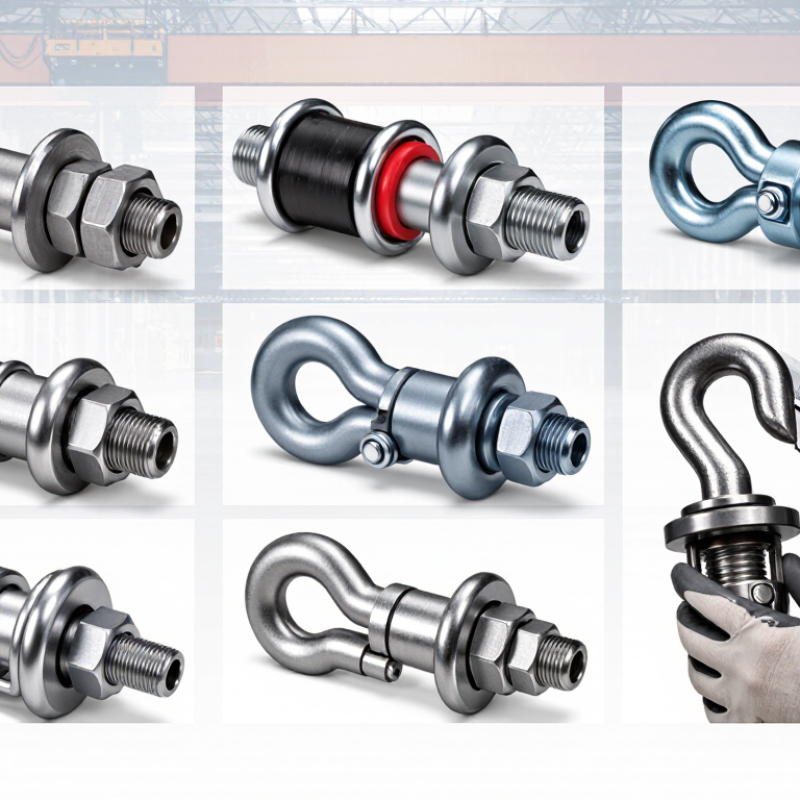
10 Best Rigging Turnbuckles for Heavy Duty Lifting?

Types of Rigging Turnbuckles for Heavy-Duty Lifting

10 Best Rigging Turnbuckles for Heavy Duty Lifting?

Types of Rigging Turnbuckles for Heavy-Duty Lifting

Turnbuckles create controlled tension in wire rope, chain, and structural bracing. The correct type depends on connection access, alignment, and inspection needs. Jaw-jaw turnbuckles suit connections requiring shackles or removable fittings. Jaw-eye models combine a clevis-style end with a fixed eye. Eye-eye turnbuckles provide a compact, permanent-looking connection when both attachment points are aligned. Hook-eye designs allow faster installation, but they demand careful latch control and are less suitable for unpredictable loading.

Open-body turnbuckles expose the threads for cleaning, lubrication, and visual checks. They are practical on dusty construction sites. Closed-body versions shield threads from impact and contamination, although inspection becomes harder. That trade-off is easy to miss.

Stainless steel resists corrosion, while galvanized carbon steel often offers stronger value for general lifting. Material choice must follow the working load limit, environment, and engineering specification.

ASME B30.26 treats turnbuckles as rigging hardware requiring identification, inspection, and proper use. Never judge capacity by body size alone. Thread condition, pin diameter, end fitting, and the weakest connected component control the safe working load.

The U.S. Bureau of Labor Statistics recorded 1,075 fatal construction workplace injuries in 2023. That figure does not isolate turnbuckles, but it reinforces disciplined lifting practices.

Keep loads in straight tension, avoid side loading, and inspect before every lift. A practical rule can still fail when angles change. Crew training and documented inspections remain essential.

Key Materials, Components, and Load Ratings

Heavy-duty lifting demands more than a large-looking turnbuckle. Material choice, component geometry, and verified load ratings control performance. Forged alloy steel suits high-tension applications when strength and toughness matter. Stainless steel resists corrosion, but its rating may differ. Never treat corrosion resistance as proof of lifting capacity. Check the certificate, traceability marking, and applicable standard. ASME B30.26 addresses rigging hardware identification, design, and use considerations.

A turnbuckle is a system, not merely a threaded body. Inspect the body, terminals, pins, jaws, eyes, and locknuts. Open-body designs permit adjustment, while closed bodies can shield threads from debris. Pins must seat fully. Load ratings usually assume straight-line tension, correct engagement, and controlled loading. Side loading, bending, thread damage, and shock loading can sharply reduce capacity. Use the working load limit, not breaking strength. Ratings are not interchangeable across sizes or standards.

The risk deserves discipline. The U.S. Bureau of Labor Statistics recorded 1,075 fatal occupational injuries in construction during 2023. That figure does not isolate turnbuckles, but it shows why selection cannot rely on appearance. The International Labour Organization reported 2.93 million work-related deaths globally in 2019, reinforcing prevention across lifting operations. A realistic inspection note is uncomfortable: clean threads can hide internal damage. Document WLL, lifting angle, inspection date, and environmental exposure before each lift. Recheck the plan when conditions change.

How to Select a Turnbuckle for Lifting Applications

Selecting a turnbuckle for heavy-duty lifting starts with the load, not the catalog photograph. Confirm the working load limit (WLL), lifting direction, and load angle. Small angles matter. A turnbuckle must be specifically rated for lifting. A tie-down model is not an acceptable substitute. Check whether the stated capacity applies to the complete assembly, including end fittings. The WLL is not the breaking load. If the lifting point is off-center, ask a qualified lifting engineer to verify side loading.

Material choice follows the worksite. Galvanized steel suits many outdoor jobs, while corrosion-resistant alloys may help near moisture or chemicals. However, surface appearance proves little. Inspect thread engagement, locking devices, deformation, cracks, and heat damage before each use. Appearance can mislead. I have seen clean-looking hardware hide flattened threads, which is a useful reminder to inspect more carefully. Select a size that allows full thread engagement without bottoming out. Keep the body accessible for adjustment, and never shock-load a suspended load. Follow manufacturer instructions and applicable local lifting regulations.

Tips: Record the WLL, inspection date, and intended configuration. Use compatible shackles and pins. Protect threads during storage. Never lift people or place anyone beneath a suspended load. Stop when the turnbuckle twists, binds, or loses tension. Do not guess. Choose a documented engineering review when the setup, angle, or load remains uncertain.

Safe Installation, Tensioning, and Inspection Procedures

10 Best Rigging Turnbuckles for Heavy Duty Lifting?

Safe installation begins with selecting a turnbuckle rated for the planned load. Confirm its working load limit, thread type, end fittings, and material condition. Never treat a tensioning device as a substitute for a certified lifting point. Check the load path carefully. It must remain straight, stable, and free from side loading. Clean threads should engage smoothly, without binding or excessive force. A rushed installation can create hidden risk.

During tensioning, apply force gradually and keep personnel outside the danger zone. Use a calibrated tensioning method when the lift requires precise load control. Do not hammer the body, extend it beyond its marked adjustment range, or introduce shock loading. Secure locking nuts, pins, or safety wires according to the equipment instructions. Stop if the assembly twists, bends, or makes unusual sounds. These signs deserve attention, not optimism.

Tips: Inspect before and after every lift. Look for stretched threads, bent bodies, cracked welds, corrosion, missing pins, and damaged identification marks. A clean-looking fitting can still hide thread damage. Record findings and remove questionable hardware from service until a qualified person evaluates it. Recheck tension after settling, especially when the load has shifted or temperatures have changed. Small details matter.

Comparison of the 10 Best Heavy-Duty Rigging Turnbuckles

Comparing the 10 best heavy-duty rigging turnbuckles requires more than checking breaking strength. A jaw-to-jaw model suits wire-rope assemblies with removable pins. An eye-to-eye design offers smoother alignment, but installation takes longer. Hook-to-hook versions are fast to connect. They need secure latches. Jaw-to-eye models balance flexibility and stability. Open-body turnbuckles allow quicker adjustment. Closed-body designs resist accidental contact with the threaded section. Galvanized steel performs well outdoors. Stainless steel handles damp conditions better. Swaged-end models create a compact connection, but they demand accurate termination work.

Load ratings must match the complete rigging system. A strong turnbuckle can still fail beside a weak shackle or poorly terminated cable. Check working load limits, thread condition, pin diameter, and visible deformation. Keep threads clean and lightly protected according to the manufacturer’s instructions. Do not judge capacity by appearance.

Field inspections often reveal small warning signs first. Bent bodies, stretched threads, cracked welds, and missing retaining devices require immediate isolation. Good practice also includes checking alignment before tensioning. Side loading is easy to create and hard to notice. That matters. My own comparison gives open-body designs higher marks for adjustment, though their exposed threads need more care. I would choose galvanized steel for general outdoor lifting and stainless steel for corrosion-sensitive areas, only when the product carries suitable certification and documented testing. The “best” choice changes with load direction, environment, connection style, and inspection access.

10 Best Rigging Turnbuckles for Heavy Duty Lifting? - Comparison of the 10 Best Heavy-Duty Rigging Turnbuckles
Comparison of representative heavy-duty turnbuckle configurations used in lifting and tensioning applications. Working load limits are typical published capacity ranges for forged or certified lifting-grade hardware; always confirm the exact rating, end-fitting capacity, inspection status, and application angle from the product certificate before use.
Rank Turnbuckle Configuration Typical Body Size End Fittings Typical Working Load Limit Approx. Adjustment Range Typical Body Material Surface Finish Approx. Weight Best Heavy-Duty Use Key Selection Advantage
1 Jaw-and-jaw forged lifting turnbuckle 1 in / 25 mm body diameter Forged jaw ends with captive pins 8,000–10,000 lbf
(3.6–4.5 t)
6–12 in
(150–300 mm)
Quenched and tempered alloy steel Hot-dip galvanized or painted Approx. 18–28 lb
(8–13 kg)
Short-span lifting bridle adjustment and structural tensioning Captive pins reduce the risk of losing end hardware during installation
2 Jaw-and-eye forged lifting turnbuckle 1-1/4 in / 32 mm body diameter Jaw end with pin and forged eye end 12,000–15,000 lbf
(5.4–6.8 t)
8–14 in
(200–355 mm)
High-strength forged alloy steel Hot-dip galvanized Approx. 30–45 lb
(14–20 kg)
Combining a pinned sling connection with an eye-mounted anchor Versatile connection arrangement for mixed rigging systems
3 Eye-and-eye heavy-duty turnbuckle 1-1/2 in / 38 mm body diameter Forged closed eyes 18,000–22,000 lbf
(8.2–10.0 t)
10–18 in
(255–455 mm)
Forged carbon or alloy steel Hot-dip galvanized or zinc-coated Approx. 45–70 lb
(20–32 kg)
Permanent or semi-permanent tensioning with shackles Closed eyes provide a compact connection with good alignment control
4 Jaw-and-jaw long-body turnbuckle 1-1/2 in / 38 mm body diameter Forged jaws with removable or captive pins 20,000–25,000 lbf
(9.1–11.3 t)
18–30 in
(455–760 mm)
Heat-treated alloy steel Hot-dip galvanized Approx. 60–95 lb
(27–43 kg)
Large lifting frames, spreader systems, and long-span adjustment Provides greater take-up length when normal turnbuckles are too short
5 Jaw-and-eye structural lifting turnbuckle 1-3/4 in / 45 mm body diameter Forged jaw and forged eye 25,000–30,000 lbf
(11.3–13.6 t)
12–22 in
(305–560 mm)
High-strength alloy steel Hot-dip galvanized Approx. 75–115 lb
(34–52 kg)
Heavy structural erection and high-tension temporary supports High capacity with one pinned end and one closed connection point
6 Eye-and-eye compact lifting turnbuckle 2 in / 50 mm body diameter Forged closed eyes 30,000–40,000 lbf
(13.6–18.1 t)
8–16 in
(200–405 mm)
Quenched and tempered alloy steel Hot-dip galvanized Approx. 90–135 lb
(41–61 kg)
High-load tensioning where installation space is limited High capacity in a relatively short overall configuration
7 Jaw-and-jaw open-body turnbuckle 2 in / 50 mm body diameter Open-body forged jaws with pins 30,000–40,000 lbf
(13.6–18.1 t)
10–20 in
(255–510 mm)
Forged high-strength steel Galvanized or corrosion-resistant painted finish Approx. 95–145 lb
(43–66 kg)
Frequent adjustment of heavy lifting assemblies Open body allows easier visual inspection and wrench access
8 Jaw-and-eye extra-heavy turnbuckle 2-1/2 in / 63 mm body diameter Forged jaw with pin and forged eye 45,000–60,000 lbf
(20.4–27.2 t)
14–24 in
(355–610 mm)
Heat-treated alloy steel Hot-dip galvanized Approx. 150–230 lb
(68–104 kg)
Very high-load lifting frames and marine construction work Combines high capacity with flexible connection options
9 Eye-and-eye long-adjustment turnbuckle 2-1/2 in / 63 mm body diameter Large forged closed eyes 50,000–65,000 lbf
(22.7–29.5 t)
20–36 in
(510–915 mm)
Forged alloy steel Hot-dip galvanized Approx. 180–275 lb
(82–125 kg)
Long-span tensioning and large temporary support systems Largest adjustment range in this comparison
10 Jaw-and-jaw engineered lifting turnbuckle 3 in / 75 mm body diameter Oversized forged jaws with heavy-duty pins 65,000–85,000 lbf
(29.5–38.6 t)
16–28 in
(405–710 mm)
Certified quenched and tempered alloy steel Hot-dip galvanized or specialized protective coating Approx. 250–375 lb
(113–170 kg)
Exceptional-load lifting frames, shipyard work, and industrial modules Highest capacity option, subject to engineered lift approval
Important safety note: Working load limit depends on the complete assembly, thread engagement, end-fitting orientation, loading angle, side loading, temperature, corrosion, and inspection condition. Do not use a general-purpose turnbuckle for overhead lifting unless it is specifically identified and certified for lifting. Inspect threads, pins, jaws, eyes, body deformation, cracks, and corrosion before every lift, and use the lowest-rated component in the assembly as the governing capacity.

FAQS

What does a rigging turnbuckle do?

It creates controlled tension in wire rope, chain, or structural bracing. It is not a lifting point. The load path must remain straight and stable.

Which end fitting should I choose?

Jaw-jaw models work with removable shackles or fittings. Jaw-eye models combine a clevis-style end with a fixed eye. Eye-eye designs suit aligned attachment points. Hook-eye versions install quickly, but require careful latch control.

What is the difference between open-body and closed-body designs?

Open-body turnbuckles expose threads for cleaning, lubrication, and inspection. They suit dusty construction areas. Closed-body models protect threads from impact and contamination. Inspection becomes harder.

Which materials are suitable for heavy-duty tensioning?

Forged alloy steel suits high-tension applications requiring strength and toughness. Stainless steel offers better corrosion resistance. Galvanized carbon steel may provide practical value in general conditions. Corrosion resistance does not prove lifting capacity.

How should I judge a turnbuckle’s safe capacity?

Use the marked working load limit, not breaking strength. Check the body, pins, terminals, eyes, jaws, and locknuts. The weakest connected component controls the assembly. Appearance can mislead.

What conditions can reduce the rated capacity?

Side loading, bending, shock loading, and damaged threads can reduce capacity sharply. Ratings usually assume straight-line tension and correct thread engagement. Never judge capacity by body size alone. Angles can change.

How should a turnbuckle be installed and tensioned?

Confirm the load limit, thread type, fittings, and material condition first. Apply tension gradually with a suitable method. Keep workers outside the danger zone. Never hammer the body or exceed its adjustment range. Stop when it twists.

What should be checked before and after every lift?

Look for stretched threads, bent bodies, cracks, corrosion, missing pins, and damaged markings. Clean threads may still hide internal damage. Record the inspection date and findings. Remove questionable hardware from service. Do not guess.

Conclusion

This guide reviews the 10 best heavy-duty rigging turnbuckles for demanding lifting and tensioning applications. It explains the main types, including jaw-and-jaw, eye-and-eye, hook-and-eye, and fork-end designs, while examining how steel grades, corrosion resistance, thread construction, end fittings, and working load limits affect performance. Readers will learn how to match a Rigging Turnbuckle to the required load, adjustment range, connection method, environmental conditions, and lifting configuration.

The article also presents practical guidance for safe installation, controlled tensioning, alignment, and pre-use inspection. It emphasizes checking threads, pins, fittings, deformation, corrosion, and identification markings before operation, as well as avoiding side loading and exceeding rated capacity. A structured comparison of ten heavy-duty options highlights differences in construction, adjustability, load capability, durability, and suitability for various lifting tasks, helping users make a clear and safety-conscious selection.


Mason

Mason

Mason is a seasoned marketing professional with a deep expertise in the company's offerings and a passion for driving brand awareness. With a strong background in digital marketing strategies, he has an innate ability to connect with diverse audiences and effectively communicate product benefits.......